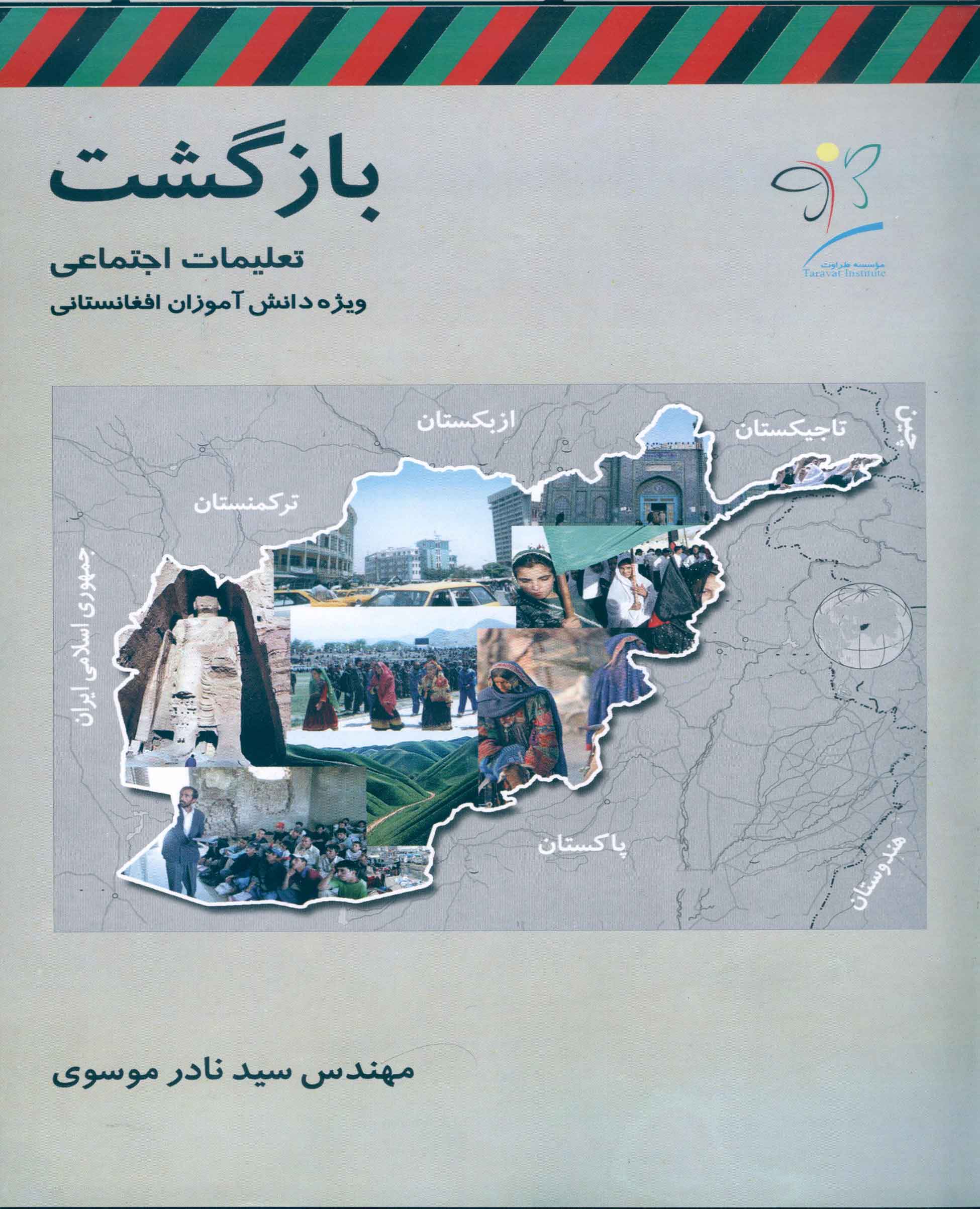
پروفسور هما هودفر در باره ی این کتاب در تحقیق خود به عنوان:
Women, Religion and the “Afghan education movement” in Iran
در باره ی کتاب بازگشت چنین می نویسد:
With the pressure on the Afghan community to leave Iran, many youths are anxious about ‘returning’ to a home they have never seen or do not remember. One interviewee told me that it was ‘kind of strange’ to be nationalistic about a country you have no image of. To address theses anxieties an Afghan children’s publishing company (Taravat), with support from one of the larger Afghan schools in Tehran, prepared a simply written book called The Return (Bazgasht), and published several thousand copies in cheap print without any financial support from outside sources. The book depicts a young Afghan raised in Iran, returning for the first time with his family. Each chapter describes the region as the family passes through different provinces, and each chapter focuses on a different ethnic group. This book circulated widely and was so successful that at the suggestion of students it was adopted for use in several schools in Tehran. Even though they are not tested on it, teachers told me that many students say it is their favorite part of the curriculum. Reflecting on the policies of the Iranian authority, UNHCR and UNICEF, and the “forced-voluntary” repatriation policy, one wonders why there is not more support for initiatives that might help make the transition easier for youths.
و در بخش دیگری از این تحقیق در باره این کتاب و نویسنده ی آن می نویسند:
Sayyed Nader Musavi, 2003. The Returned, Tehran: Taravat Children’s Publishing House. Financial support is not usually available to the very people who know the community best and invest their time and energy. To connect to international agencies one needs to know English and generally be familiar with NGO systems and protocol. Neither the UNHCR, UNICEF or UNESCO have time for this small Afghan publishing house for youth publications , even though it is doing the very task that these agencies are paid handsomely to accomplish. During 2001-2004 I tried several times to have UNICEF interested in the Afghan organization activities despite pleasantries nothing except a bunch of pen and note books came out of it. Ironically we had more luck with the Iranian ministry of education who at least provided good advice on the possibilities of publication and ways of cutting the cost of publications